

This is the first of four drawings which map the north side of Front Street, Acomb. Situated two miles west of York, the village of Acomb became part of the City of York in 1917. Front Street is in the Acomb Conservation area.
The name Acomb is thought to come from Old English, and to mean something like the ‘place of the oaks’. The village is mentioned in the Domesday Book as Achum or Acum.
It also has been regarded as the place where the body of the Roman Emperor Septimus Severus was consigned to flames. Whilst looking for the exact location of this hill I found the following description from a book written in 1843 by by Rev Francis Thackeray: ‘Researches into the Ecclesiastical and Political State of Ancient Britain’ . He wrote that Severus died at York in AD211 and his ‘body was carried forth by the soldiers to the funeral pyre, kindled in a place westward of the city, where is a large hill of earth which according to Camden, Radulphus Nigersays was called in his time, Siver’s Hill from Severus. His ashes, deposited in an urn of porphyry, were conveyed to Rome and placed in the sepulchre of the Antonines’
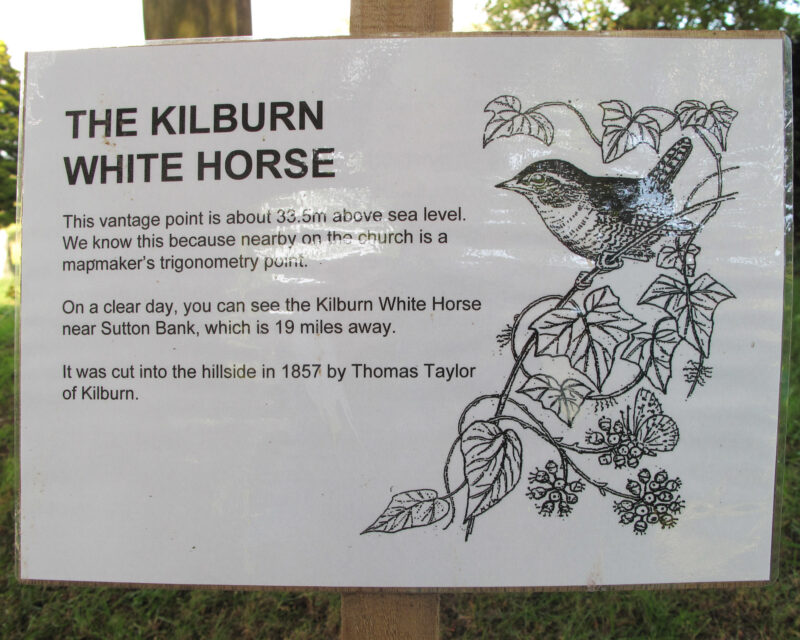
I grew up in Acomb but didn’t really appreciate its rich history until many years later. As for Siver’s Hill, I don’t know the exact location, but York is in a vale and the few hills stand out. The only hill that I guess it could be is the one that St Stephen’s Church Acomb is built upon. I once stood outside the lychgate and to the south-west I could see the cooling towers of Ferry Bridge Power Station, to the north the white horse of Sutton Bank (see below) and to the east, the windmill.
Signed limited edition prints now available – please get in touch if you are interested or check out my Etsy shop as I keep some in stock.
60cm wide £85 Edition of 30 only
90cm wide £130 Edition of 10 only
Materials: Pen and ink with egg tempera wash on 300gsm Fabriano Artistico cold pressed cotton paper.


